บริษัท ไอร่า แฟคตอริ่ง จำกัด (มหาชน)

Knowledge Hub

สินเชื่อแฟคตอริ่ง (Factoring): ตัวช่วยเปลี่ยนใบแจ้งหนี้เป็นเงินสด เสริมสภาพคล่องให้ธุรกิจไม่สะดุด

สำหรับผู้ประกอบการ โดยเฉพาะธุรกิจขนาดกลางและขนาดย่อม (SME) ปัญหาหนึ่งที่มักจะเจอคือ “การขาดสภาพคล่อง” แม้ว่าจะขายของได้ดี มีออเดอร์เข้ามาตลอด แต่กลับไม่มีเงินสดหมุนเวียนในกิจการ เพราะต้องรอเครดิตเทอม (Credit Term) จากลูกค้า ซึ่งอาจจะนานถึง 30, 60 หรือ 90 วัน ปัญหานี้อาจทำให้ธุรกิจของคุณสะดุดได้ ไม่ว่าจะเป็นการจ่ายเงินเดือนพนักงาน, ซื้อวัตถุดิบ, หรือลงทุนขยายกิจการ แต่ไม่ต้องกังวลครับ เพราะมีเครื่องมือทางการเงินที่เรียกว่า “สินเชื่อแฟคตอริ่ง” (Factoring) ที่จะเข้ามาช่วยแก้ปัญหานี้ได้ สินเชื่อแฟคตอริ่ง คืออะไร? แฟคตอริ่ง คือ บริการทางการเงินประเภทหนึ่ง ที่เปรียบเสมือนการ “ขาย” ใบแจ้งหนี้หรือใบวางบิล (Invoice) ที่ยังไม่ถึงกำหนดชำระของธุรกิจคุณ ให้กับสถาบันการเงินหรือบริษัทที่ให้บริการแฟคตอริ่ง (ที่เราจะเรียกว่า “แฟคเตอร์” หรือ Factor) โดยแฟคเตอร์จะจ่ายเงินสดล่วงหน้าให้คุณก่อน อาจจะเป็น 70-90% ของมูลค่าใบแจ้งหนี้นั้นๆ ทำให้คุณได้รับเงินสดมาหมุนเวียนในธุรกิจได้ทันที โดยไม่ต้องรอให้ครบกำหนดชำระจากลูกค้าเอง กระบวนการทำงานของแฟคตอริ่ง (เข้าใจง่ายใน 4 ขั้นตอน) ประโยชน์หลักของสินเชื่อแฟคตอริ่ง สินเชื่อแฟคตอริ่งเหมาะกับใคร? โดยสรุป สินเชื่อแฟคตอริ่งเป็นเครื่องมือทางการเงินที่ทรงพลังและยืดหยุ่นสำหรับผู้ประกอบการ ช่วยแก้ปัญหาการรอเงินจากลูกค้า ทำให้ธุรกิจมีกระแสเงินสดที่แข็งแกร่ง พร้อมที่จะเติบโตและคว้าโอกาสใหม่ๆ ได้อย่างมั่นคง

Green Marketing สำหรับผู้ประกอบการ SMEs: แนวทางและประโยชน์ในการปรับตัว

การตลาดสีเขียว (Green Marketing) หรือการทำการตลาดที่เน้นความยั่งยืนและการใช้ทรัพยากรอย่างมีประสิทธิภาพ ได้กลายเป็นแนวทางสำคัญสำหรับธุรกิจในยุคปัจจุบัน โดยเฉพาะในหมู่ผู้ประกอบการ SMEs ที่ต้องการสร้างความแตกต่างและตอบโจทย์ความต้องการของลูกค้าในยุคที่มีความตระหนักเรื่องสิ่งแวดล้อมเพิ่มมากขึ้น 1. ทำความเข้าใจกับ Green Marketing Green Marketing คือการตลาดที่มุ่งเน้นไปที่การส่งเสริมผลิตภัณฑ์หรือบริการที่มีผลกระทบต่ำต่อสิ่งแวดล้อม ไม่ว่าจะเป็นการใช้วัสดุที่สามารถรีไซเคิลได้ การลดการปล่อยคาร์บอน หรือการส่งเสริมกระบวนการผลิตที่ยั่งยืน ทั้งนี้เพื่อให้ผู้บริโภครู้สึกว่าพวกเขากำลังช่วยรักษาสิ่งแวดล้อมผ่านการเลือกซื้อสินค้าหรือบริการจากธุรกิจที่ใส่ใจเรื่องนี้ 2. ประโยชน์ของ Green Marketing สำหรับ SMEs 3. กลยุทธ์ Green Marketing สำหรับ SMEs 4. ตัวอย่างธุรกิจ SMEs ที่ประสบความสำเร็จจาก Green Marketing 5. ข้อควรระวัง แม้ว่า Green Marketing จะมีประโยชน์มากมาย แต่ผู้ประกอบการ SMEs ควรระวังการทำการตลาดที่อาจถูกมองว่าเป็นการหลอกลวง (Greenwashing) คือการอ้างว่าเป็นมิตรกับสิ่งแวดล้อมโดยที่ไม่จริง ดังนั้นต้องมั่นใจว่าผลิตภัณฑ์หรือบริการที่คุณนำเสนอนั้นมีความยั่งยืนจริง และสื่อสารให้ชัดเจนเพื่อไม่ให้เกิดความเข้าใจผิดกับลูกค้า 6. สรุป การทำ Green Marketing เป็นทางเลือกที่ดีสำหรับผู้ประกอบการ SMEs ที่ต้องการสร้างความแตกต่างในตลาดและตอบสนองความต้องการของผู้บริโภคในยุคที่ใส่ใจสิ่งแวดล้อมมากขึ้น ไม่เพียงแค่ช่วยเพิ่มโอกาสในการเติบโตของธุรกิจ แต่ยังเป็นการร่วมมือกับการรักษาสิ่งแวดล้อมอีกด้วย

Focus Strategy สำหรับผู้ประกอบการ SMEs

การดำเนินธุรกิจในยุคที่มีความแข่งขันรุนแรง เป็นเรื่องที่ทุกๆ ผู้ประกอบการต้องพิจารณาอย่างจริงจัง โดยเฉพาะในธุรกิจขนาดเล็กและกลาง (SMEs) ซึ่งต้องเผชิญกับทั้งความสัมพันธ์กับลูกค้า, การจัดหาทรัพยากร, และการเสี่ยงที่ต้องเผชิญหน้า เพื่อให้การดำเนินธุรกิจเป็นไปอย่างมีประสิทธิภาพและยั่งยืน Focus Strategy เป็นหนึ่งในวิธีการที่ช่วยให้ธุรกิจ SMEs สามารถแข่งขันได้ในการดำเนินธุรกิจ มีวิธีการดังต่อไปนี้: การใช้ Focus Strategy เป็นหนึ่งในวิธีการที่ช่วยให้ธุรกิจ SMEs สามารถเผชิญหน้ากับความแข่งขันได้อย่างมีประสิทธิภาพ โดยการเลือกโฟกัสในการตลาดเฉพาะนั้นช่วยให้ธุรกิจสร้างความแตกต่างและมีความสามารถในการแข่งขันในตลาดที่มีการแข่งขันรุนแรงอย่างมีประสิทธิภาพ การพิจารณาและวางแผนใช้กลยุทธ์นี้อาจช่วยให้ธุรกิจ SMEs เติบโตและประสบความสำเร็จในระยะยาวได้อย่างยั่งยืน ChatGPT can make mistakes. Check important info.

10 Tips on finances that SME entrepreneurs should know

In addition to business management stimulate sales Looking for a partner to increase business growth channels or manage various matters? Finance is another matter that is equally important for business owners. AIRA has 10 financial recommendations. That SME entrepreneurs or business owners should know as follows: Therefore, before reducing costs All entrepreneurs You should ask the question: Expenses that you want to reduce Is this a necessary expense? And what do you want to reduce these expenses for?

How to evaluate working capital so that your business has enough money?

A popular problem for SMEs that “go bankrupt” sometimes does not come from losses. But mostly caused by “Lack of working capital” So what is working capital? How can we assess the working capital of a business? And will entrepreneurs be able to increase it? The AIRA has the answer to present as follows. What is working capital?working capital In English, it’s called Working Capital, which is short-term reserve capital that a business needs to have. To run the business smoothly, the more working capital you have, it means the business has high liquidity. Have assets quickly converted into cash Able to pay debts as scheduled, but if working capital is low, it means the business is starting to be at risk. on any day There may be a lack of liquidity and the money cannot be made in time to repay debts. This type of problem can often be found in SMEs or newly opened startups that do not prepare enough cash or liquid assets to reserve. And in the end, it may have to end with the word “broken”. How can working capital be analyzed in financial statements?Once we understand the meaning and importance of working capital. Entrepreneurs can evaluate their working capital. By considering “Current assets” compared to “Current liabilities” which can be viewed from the statement of financial position Current assetsCurrent assets Mostly it consists of 3 main components. Arranged from highest to lowest as follows: Cash is considered the most liquid asset. That can be used to pay for products or pay off debts very well.Trade accounts receivable It arises from the fact that we sell products or provide services on credit, for example, after selling the item, it will be another 30 days to receive the money. In the financial statement, this item will be shown as an asset in the category of trade receivables. which is less liquid than cash But it can still be classified as working capital.Inventories It is a product that is left in the warehouse or has not yet been sold. Inventories are less liquid than cash and receivables. However, Inventories are considered a good source of working capital for production businesses and trading businesses. Current liabilitiesCurrent liabilities Classified as an obligation that the business must pay in the near future (not more than 1 year). An example of this is a common current liability. Arranged from highest to lowest are:Trade accounts payable It is caused by the fact that we have already purchased the product or service. but not yet paid Most of the time, we usually get a credit term that gives a longer payment period according to the agreement.Accrued expenses This part is an expense that we have used in our business but have not yet paid for it, such as accrued salary. Unpaid wages Accrued rent, etc.short term loans Of course, the loan is short-term. Entrepreneurs must make payments on time along with interest according to their obligations with banks or lenders, such as business credit card debt. Overdraft (OD)Simply put, current liabilities are the opposite of current assets. Because having a lot of current debt means that the entrepreneur must pay off the debt within a very short time as well. Once you understand the meaning of assets and current liabilities How to check business liquidity Can be compared as follows. How much working capital should a business have?Working capital, if there is little Business has risks. There may be a lack of liquidity. The money was unable to pay the debt in time.But if there are too many, it may cause the business to lose opportunities for growth. Instead of investing the money to make it grow, they keep it and don’t use it. Therefore, it is the origin of the question. How much working capital should a business have?This answer varies according to each business. Entrepreneurs must consider Summary: How to increase working capital for your business?If anyone checks working capital and still doesn’t have enough. or negative numbers There are many ways to increase working capital, such as following up with debtors to pay on time. or give a discount To make debtors pay fasterManage the warehouse efficiently, such as not stockpiling more products than required.Sell products faster You may do promotions. or give free gifts to attract customersNegotiate to request a longer credit term from creditors.Be careful about penalties from paying off loans. or taxes delayedReduce unnecessary expenses each month.All of the above is what every business owner should know about working capital. Even though it has nothing to do with the profits of the business. But working capital is like the lifeblood that sustains the business. And sometimes it can determine the fate of this business to survive or not in the long run.If you don’t want to “go bankrupt” in an unexpected way. In addition to knowing about profits You must also know how to manage sufficient working capital.In the case where the business operator is a seller of goods or services Have business partners who are government agencies or large private companies? and immediately need cash flow to enhance liquidity within the business I don’t want to wait until the commercial credit term is over. Such documents can be used to use the Factoring service (selling trade receivables) with AIRA up to 90% of the document value, quick approval, quick cash receipt.

Difference between “Invoice , Bill and Receipt”

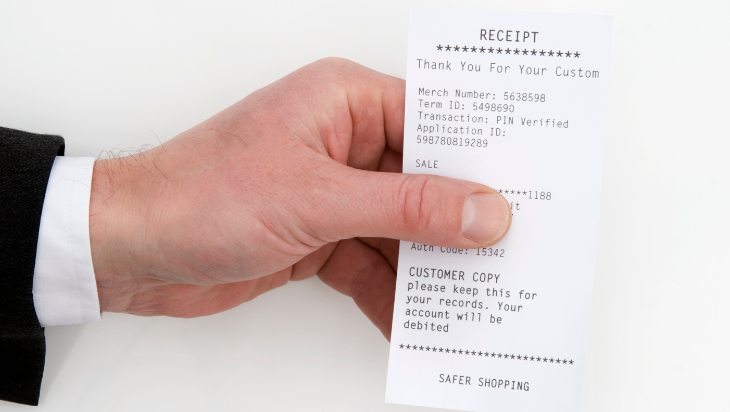
Many entrepreneurs are probably familiar with commercial documents. Billing slip/invoice (Invoice), bill/bill (Bill) and receipt (Receipt)  all of the above documents Have you ever heard But many entrepreneurs You may not be aware of the nuances of these documents. Therefore causing confusion and may result in Miscommunication, therefore, in order for you to be able to communicate and understand the referenced commercial documents. Then came to study the differences. Billing slips/invoices (Invoice) are documents issued by operators to inform customers of the amount to be paid. and use it as a document for payment Mostly used with business types Product or service where credit is placed on payment Bill/Bill (Bill)  is a document used for collecting money. It is similar to an invoice. Because it is what will inform customers about the price of the product or service. When to pay This is because there is a list of products sold or services provided along with the amount due for each item and the total outstanding amount. Bills are often used for products and services that require payment in full. There are no outstanding payments. Receipt (receipt)   is a type of commercial document. A receipt is different from Billing slip/invoice and a bill that asks the customer to pay for the goods or services received. The receipt is a document/evidence that the service or product has been paid for. Therefore, the invoice (Invoice) or bill (Bill) comes before the payment. Once the money has been processed, you will receive a receipt later. Differences of “Invoice, Bill and Receipt”             If you are a business entrepreneur You will need to send an invoice to the customer. In the case that you have already delivered the product or service After the customer has made payment, the seller must send a receipt to the customer. as proof of payment             On the other hand, if you are a customer, the invoice is a summary of the outstanding amount. It will inform you of the items. The amount owed and the period for payment. comes on the billing sheet/invoice (Invoice)  and when you Upon successful payment for goods or services, you will receive a receipt (receipt)  each time from the seller. As for bills/bills (Bill)  or invoices, they are often used to inform payment. The cost of goods or services must be paid by the customer at that time. An invoice is sent → The customer makes payment for the product or service → Receives a receipt. The customer wants to pay for goods or services → receives a bill/bill document → the customer makes payment → Receive a receipt In the case where the business operator is a seller of goods or services Have business partners who are government agencies or large private companies? and immediately need cash flow to enhance liquidity within the business I don’t want to wait until the commercial credit term is over. Such documents can be used to use the Factoring service (selling trade receivables) with AIRA up to 90% of the document value, quick approval, quick cash receipt. Example of billing/invoice (Invoice) Example of Invoice Example of receipt

Which expenses are or are not tax expenses?

Many SMEs entrepreneurs may have wondered why the company expenses that we pay Even though there is a receipt that is correct and complete But the accounting department or accounting office informed that it cannot be deducted as an expense in calculating net profit for tax purposes. Or to summarize it simply, the expenses we pay cannot help the entrepreneurs save taxes at all. Therefore, AIRA Factoring would like to allow us to explain to SMEs entrepreneurs at the same time that the expenses What type of payment is it? Is it a tax expense or not? What are the company’s expenses?          Company expenses are a type of cost that is paid out by the business. To pay for goods or services used in business operations          The company’s expenses can be separated into “Accounting expenses” and “Tax expenses”  Most entrepreneurs are unable to separate the two types of items. However, they can be easily explained as follows. Accounting expenses Accounting expenses are expenses that the company pays for goods or services with correct evidence of payment, such as paying employees’ salaries. Paying for products to be sold This expense will be considered as cost of sales. Tax expenses Tax expenses Refers to expenses that the business pays out. with evidence of correct payment And the law allows such expenses to be deducted from income in calculating net profit for tax purposes. But tax expenses are mostly the same as accounting expenses. But there are exceptions. Some expenses can be accounting expenses. But they cannot be calculated as tax expenses, called “prohibited expenses”. Prohibited expenses Prohibited expenses are expenses that the Revenue Department determines: It cannot be used to deduct from income in calculating profits for tax purposes. Which can be divided Prohibited expenses are divided into 8 categories as follows: Personal expenses of executives or business owners that are outside of company regulations.          Personal expenses of executives or business owners, such as gas for the executive’s car, food allowances, financial aid, merit-making ceremonies, ordination ceremonies that are personal, are not related to the company. or expenses for employees or employees who are outside the regulations It cannot be deducted as an expense at all.          If the company wants to use it for company expenses or wants to use the company’s money to pay By the best way It is clearly specified in the company regulations. This money will be considered as welfare provided by the company to employees. So it can be used as an expense. 2. Expenses to entertain customers that exceed what is required by law.          The law stipulates that the company’s customer entertainment fee must not exceed 2,000 baht per person per visit and must not exceed 0.3% of the company’s income. and the ceiling of expenses in this section The maximum is 10 million baht. Therefore, if the expenses on this item exceed what is required by law. It cannot be deducted from income when paying taxes. 3. Expenses without recipients   Unclaimed expenses are expenses that are paid in cash and no receipt has been issued or there is no clear evidence to whom the payment was made. which if there is no clear source of payment Tax expenses cannot be deducted. They are mostly found in small companies. Therefore, the company must specify the recipient’s name, issue a receipt, or have clear evidence of the transfer. To use as tax expenses 4. VAT expenses          The next expense is one that most people often misunderstand. That is an expense that is VAT. The simple explanation is that in large companies there will be VAT registration. The company must keep a portion of the money to pay VAT. By paying VAT at the Revenue Department.          For example, The company sells products for 100 baht, meaning the company actually receives only 93 baht, while 7 baht is considered the part that must be paid for VAT. Therefore, this amount Therefore, it is not considered a tax expense of the company. 5. Expenses to the parent company or subsidiary company          In normal accounting, expenses paid by the parent company to the subsidiary are considered expenses. But in terms of tax according to Thai law The two companies are considered to be the same company. Therefore, purchasing goods and services between each other It is considered a matter of the flow of money in the company only. Cannot be counted as a tax expense. 6. Reduced real estate expenses         Normally, in accounting, the value of real estate is always assessed. to reflect the changing value of assets In the event that the asset value decreases In accounting, it is treated as an expense in the financial statements. But cannot be used as a tax expense. This is because real estate appraisals cannot tell the true price. It will be known only when the sale actually takes place. The Revenue Department therefore prohibits taking the value of the company’s real estate that has decreased. taken into account as absolute expenses 7. Wasted natural resource expenditures          Wasted natural resource expenses If I were to give an example to show the picture, The company is in the business of cutting and selling wood. Of course, the trees that are cut down will reduce the available resources. In general accounting, it is considered an expense. But in terms of taxes, it cannot be used as an expense. This is because the value of the resources being used cannot be assessed. And there are no clear rules for evaluating to find lost value. If given the opportunity to use this item as an expense Most companies tend to overestimate the value of wasted resources. In order to save taxes for the company 8. Fine expenses          Fines are always incurred by companies whether they are minor or major violations. and when having to pay a fine Of course, this money belongs to the company that paid it out. In general accounting, it must

How to fix bad credit come back good again

Many SME entrepreneurs are more or less worried about being on the “credit bureau” or being “blacklisted”. And of course, businesses often have fluctuations, ups and downs. Sometimes the money isn’t available in time to pay off credit card debt. Or sometimes the money may come in slowly. Therefore causing many people to become addicted to the credit bureau. But all this Being stuck with a credit bureau and being blacklisted are different. Today, AIRA will take all entrepreneurs to understand that What is a credit bureau? How many years of credit bureau? What do credit bureaus check? And how is it different from being blacklisted? Including telling you how to fix bad credit and make it good again. What is a credit bureau? Credit Bureau or National Credit Bureau Company Limited (National Credit Bureau) is an institution that acts as a center for storing credit account information and payment history for all types of loans of natural persons and juristic persons. which are sent from financial institutions and companies that are members of credit bureaus which we call “Credit Information”: Individuals can check their financial health by submitting a request for a credit check through the credit bureau. Mobile Application or various service channels such as credit bureau checking centers Bank counters / online banks / ATMs or postal service counters that provide services, etc. can be inspected every year. It’s like an annual health check. In case you find anything unusual, it can be fixed in time. In general, the credit bureau will show credit history for the past 3 years. In the case of closing all debts. I haven’t used the credit. The credit history report in the credit bureaus will gradually retract, month by month, until after 36 months or 3 years, the report will no longer be seen. Or in the case where the customer has defaulted on repayment and has been overdue for more than 90 days, currently it is required that financial institutions will send outstanding loan information to credit information companies continuously for not more than 5 years from the date the overdue amount is over 90 days. years, it is not that the report will disappear immediately. It will go back to the same situation as when we closed all our debts. The history will gradually move away. It will take another 3 years to completely retreat from the report. For some people, some debts have gone bad for 3 years and they can get new loans. Don’t forget that our history of credit usage is not limited to the credit bureau only. But financial institutions or financial service providers still store information. How long will it last? 10 years, 20 years or longer depends on the criteria of each institution. Which can affect future credit applications. What is a blacklist? Blacklist is often a catchphrase that people often use to refer to undisciplined payment behavior. Until I’m in bad debt. Many people often misunderstand that this word comes from the credit bureau. Let me emphasize clearly here again that the credit bureau is responsible for storing, collecting and processing credit information of financial institution customers as specified by the financial institution or company. It is provided by members only. I don’t have duties. “Blacklisted” or Blacklist as many people understand. We manage bad credit, incorrect payments, financial institutions. Or the financial service provider simply sends actual transactions for a specified period of time. The results of our actions will be reflected when we apply for a loan. or credit card and did not receive approval The criteria for consideration here will be as intense as each institution will determine. Applying for a loan and getting approved Usually there is a due date for the payment. In the case where we have delayed payment of installments There will be debt collection, which will incur additional costs. We will give an example of a personal loan for you to see. If we pay the debt late What will happen? What expenses will there be? Examples of defaulting or delaying payment of debt What expenses will there be? Debt collection costs For personal loans with outstanding balance or accumulated overdue payments of 1,000 baht or more, the bank will charge 50 baht for the first time and 100 baht each time. Interest penalty in case of late payment The bill will be calculated from the date the payment is due. By adding an additional 1% – 3% depending on the overdue period. Now, entrepreneurs You should understand the meaning of the credit bureau. And being on the blacklist has been brief enough. And if we are one of the people who are experiencing this problem, don’t worry at all. Because there is a solution and make a bad financial history good again. You can also apply for new loans. Don’t want to lose credit What can I do? For people who still have good financial liquidity If we are still able to pay off debt while still having money left to spend. Things that can be done are as follows. Summary of debts that still have outstanding items, for example, with which financial institutions are they owed? And in what amount? There are details of interest and how much must be paid per installment. In order to be able to set a budget to calculate income and expenses appropriately. Payment plan Try calculating which debt you think you can get rid of the quickest. This will increase your payment amount each installment so that that debt will be paid off as quickly as possible. And especially if any debt has compound interest, you should hurry to close the debt as soon as possible. Try to pay off debt on time every installment. Because it will affect the approval of new loans in the future. Use a lump sum to pay off debt, for example when you get a bonus. or commission money or other extra money after dividing the savings Don’t forget

Ways to make your business passive income

1. Profit from selling through online channels (Profit Income) Nowadays, there are many ways to run a business that do not require a small investment. No need to manage and take care of stock. But you can sell them all the time, such as selling photos online, selling e-books, selling Line stickers, etc. or posting to sell products or services online on Social Media Platforms or via various Market Places, which can be another channel. Ways to make money for your business 2. Interest on loans (Interest) For businesses with large amounts of cash on hand For example, a business that has the nature of buying on credit (Credit Term) but selling products for cash. Such cash should be allocated to invest to generate returns in the form of interest, such as depositing it in the bank, buying bonds, or lending in other forms. The advantage is that it can be a passive income for the business. 3. Dividends from stocks (Dividend) In addition to taking cash in hand to lend out Can be divided to invest in the stock market or invest in other businesses to receive returns in the form of dividends If you choose to invest In a large, stable business There is continuous growth. Investor businesses have the opportunity to create a large amount of Passive Income. 4. Asset rental (Rental Revenue) Businesses can rent out business assets that are not currently being used such as land, buildings, warehouses, machinery and equipment to receive continuous passive income. 5. Increased value of assets (Capital Gain) Many types of assets, such as land, buildings, and stocks, may increase in value over time. If the business sells such assets and profit from The added value of assets (Capital Gain) is also considered as one of the company’s income. Therefore, before deciding to buy any assets Business should consider The value of that asset in the future is also included. 6. Subscription fees (Subscription Fee) Businesses can create content such as videos, articles, reports, or seminars. Then charge customers a monthly or annual membership fee to access those content. 7. Royalty Fee for use of intellectual property (Royalty Fee) Classified as income that arises from customers paying to buy ideas, franchises, or use services. Business platform system If the business invests in creating such intellectual property You can create Passive Income continuously and grow as your member base expands. 8. Advertising Revenue If the business has its own media space that can broadcast or communicate to a large number of target groups, such as a website, fan page, or even just various billboards on its own space. You can also create passive income from selling or renting those areas for advertising.

What is factoring?

Factoring is a service for purchasing trade receivables. It’s a business loan. And it is a short-term loan that is given to entrepreneurs and SME business owners to bring existing invoices or commercial documents such as purchase orders, outstanding invoices, billing notes, or parcel receipts to sell in order to convert them into cash for use in circulation. In the business of enhancing liquidity Only entrepreneurs, SME business owners who have delivered work or completed operations can bring the invoice for sale, withdraw cash with us, receive up to 90% of the document value, and then AIRA will collect the money from the trade partner when the credit is complete. trade term After deducting the burden The operator will receive the remaining amount (Reserve). Factoring Loans Therefore, it is a convenient and fast choice. Solve liquidity problems for business owner And it is a loan that does not use collateral. allowing entrepreneurs to expand their business without having to wait for a long credit term for customers ‘ Why AIRA?

Scroll to Top